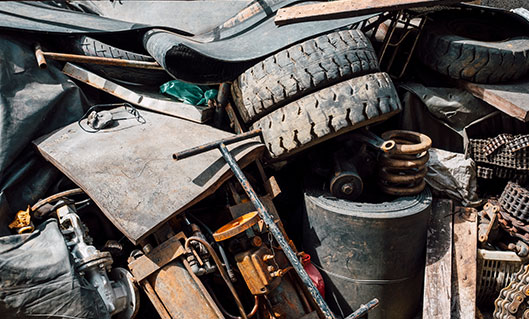
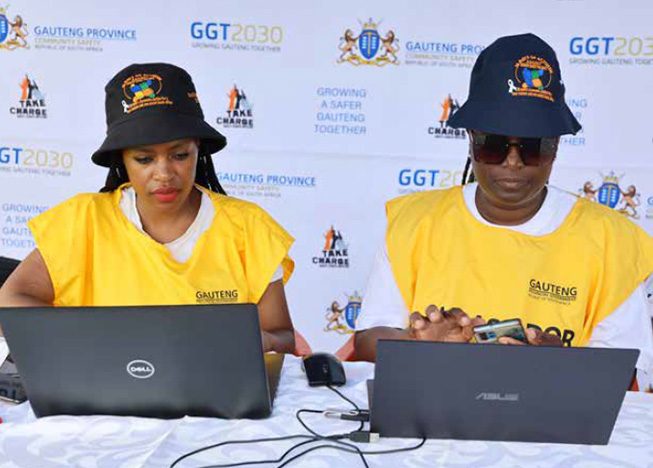
The Department of e-Government in partnership with the University of Johannesburg (UJ) has developed an e-Waste Management System to help address both the mounting e-waste and the current unemployment crisis in Gauteng.
This project was launched on Tuesday, 1 March 2022 by Gauteng Premier David Makhura alongside MEC Nomantu Nkomo-Ralehoko in Newtown Johannesburg.
Premier David Makhura said the e-Waste Management partnership, will enable the provincial government to coordinate efforts of the disposal and recycling of e-waste across the Gauteng City Region.
“With the ever-increasing volumes of e-Waste, the lack of a coherent provincial response
to address the challenges e-Waste posed to the environment has become a pressing
matter. The e-waste management strategy and partnership with UJ creates an ecosystem to
discard, recycle or donate e-Waste products in a manner that creates small businesses
and job opportunities among the youth,” said the Premier.
e-Waste refers to the disposal of electrical and electronic gadgets. The e-waste management system is being implemented as a solution to help improve the collection, recycling, and safe disposal of electronic waste (e-waste) in the province.
Gauteng MEC of e-Government Nomantu Nkomo-Ralehoko, who is the project lead on behalf of the provincial government said that apart from address the challenges of poorly coordinated e-waste management, the strategy also aims to help in educating Gauteng residents on issues of e-waste, and further instil a culture of recycling electronics.
“The e-waste management system will also assist in inspiring creativity amongst the youth, to be able to recycle and create something meaningful from discarded gadgets. This will further assist in stimulating the economy through SMME support and job creation” said the MEC.
Expanding on the available economic opportunities, University of Johannesburg, Deputy Vice Chancellor: Research & Internationalisation, Professor Saurabh Sinha said the strategy is to target entrepreneurs at the helm of SMMEs by giving them access to training and expertise.
“To achieve this goal, a blended learning approach will be followed. The Johannesburg Business School and the Institute for Intelligent Systems will develop a series of online, asynchronous short learning programmes that entrepreneurs in the province can access. We want to unlock solutions that not only address issues such as e-waste but also create a value chain that speaks to SMMEs and the informal sector through the creation of a circular economy,” said Sinha.